CHARITAS 💙
16.01.2026
Charitas (or Caritas) is a Latin word most often translated as “love” or “charitable love,” and is closely associated with Christian teachings.
In Christian theology, it is one of the three theological virtues: faith (fides), hope (spes), and love (caritas). In some translations of the Bible (e.g., the Latin Vulgate), the word caritas is used in places where “love” appears in modern translations. Caritas/Charitas here does not mean merely ordinary human affection or sympathy. It is God’s love, which flows from God to humankind and back to God, as well as from humankind to one’s neighbor.
What exactly does charitas mean in Christianity:
- Selfless, sacrificial love that seeks no personal gain
- The love with which God loves humankind, and through which humankind is called to love God and one’s neighbor
- The source and summit of the Christian life—without love (charitas), no good deed has full value before God
- A supernatural virtue instilled in the soul at baptism along with faith and hope
An example from the Bible:
1 Corinthians 13—the so-called “Hymn to Love”:
“If I give away all I have, if I even give my body to be burned, but do not have love, I gain nothing.” (1 Cor 13:3)
“And now these three remain: faith, hope, and love. But the greatest of these is love.” (1 Cor 13:13)
“Above all, clothe yourselves with love, which binds everything together in perfect harmony.” (Col 3:14)
The difference between charitas and charity:
- Charitas is a Latin term denoting love for one’s neighbor, a spiritual virtue
- Charita is the Czech term derived from it, referring to a specific charitable activity or organization
Charitas and the Pauline Order (Order of the Least Brothers of St. Francis of Paola):
The Order of the Minims (Latin: Ordo Minimorum), known in the Czech Republic as the Paulines, is a Catholic religious order founded by St. Francis of Paola (1416–1507) in Italy. And it is precisely “charitas” that is one of its absolutely key principles—St. Francis of Paola is often depicted with a coat-of-arms shield above his head or on his chest bearing the inscription “Charitas.”
“Francisce, haec erunt insignia tui Ordinis.” According to tradition, the Archangel Michael appeared to St. Francis during prayer, holding a radiant shield bearing the inscription “Charitas,” and handed it to him with the words: “This shall be the emblem of your Order.” The light of this shield, shining like the sun, is the symbol of the Order of the Little Brothers of Saint Francis of Paula (the Paulans).
In the context of the Order’s spirituality, “charitas” signifies the selfless, giving love that God has for people and for all of His creation. The Paulans are called to strive to imitate this love. St. Francis of Paola often told them: “Do everything out of love for God.”
Key Principles of the Paulines:
The Order is governed by three vows—poverty, chastity, and obedience—but St. Francis of Paola added a fourth, which is essential to our discussion: 4. penance (Latin: vita paenitentialis) —this penitent love (charitas combined with penance) means —living in radical modesty and humility, out of love for God and for the sake of others,
being the least among the least (minimi), because Christ Himself became a servant
to serve the sick, the poor, and the marginalized—out of pure love, not for reward
Charitas in Pauline Spirituality:
- Love for Christ in the poor: the Paulines believe that Christ is present in the poor and the suffering. Therefore, their service was not charity in the modern sense, but a devout response to the love of Christ.
Charitas as asceticism: St. Francis of Paula lived an extremely austere ascetic life, including vegetarianism, silence, and fasting, but not as a feat of self-discipline, rather as a gift of love (charitas) to God and to people.
Charitas in prayer and service: It is an inner attitude—the Paulines pray for the world, suffer with others, and often live in seclusion, but always with the goal of being mediators of God’s love.
St. Francis of Paola—an example of charitas:
- He rejected honors and influence, even though popes and kings sought him out
- He helped the poor without expecting anything in return; his deeds were a pure expression of God’s love within him
- He had the gifts of healing and prophecy, but he always used them in service to others, not to himself
Read also
🌙 Night of Churches: This year, you'll experience even more with us!
12.05.2026
🗓️ May 29, 2026
⌚️ 5:00 PM – 10:00 PM
📍Vranov 7, 664 32
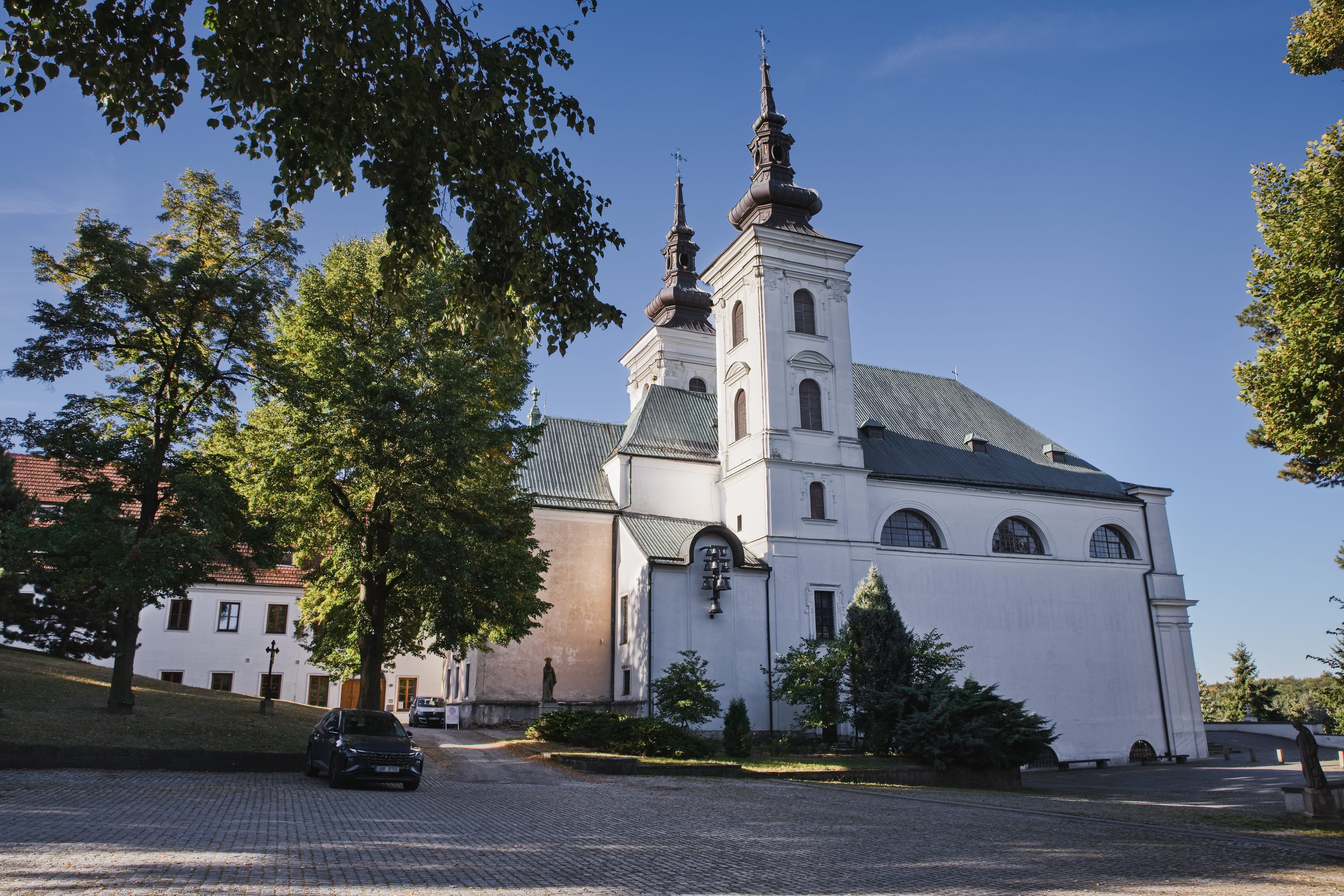
The Vranov Church and mausoleum are an integral part of the Night of Churches, but this year we have something new in store for you. For the first time, our Spiritual Center will also open its doors on this evening. ✨
We want to show you Vranov not only as a historical monument, but as a vibrant meeting place. Come take a look around our facilities, relax in the garden, or simply share this special evening with us. 🕯️
Our doors are wide open to locals and visitors from far and wide alike. ⛪🚶🏽
Important Information for Our Guests: Changes to the Local Lodging Tax
30.03.2026
Dear Guests of the Spiritual Center,
We would like to inform you of a change that will affect your future stays with us in Vranov.



 DC Instagram
 DC Facebook
 DC YouTube
 DC Visualisation